

What Is Polycystic Metabolic Ovarian Syndrome (PMOS)?
Polycystic Metabolic Ovarian Syndrome (PMOS) is a complex hormonal and metabolic condition that can affect menstrual cycles, ovarian function, hormone levels, fertility, and overall health. Women may experience irregular or missed periods, acne, unwanted hair growth, weight changes, or difficulty becoming pregnant. The condition may also be associated with insulin resistance and other metabolic concerns that can influence overall well-being. Because PMOS can affect each woman differently, comprehensive evaluation and personalized management are important for addressing both current symptoms and long-term health. At Cobb Women’s Health, Board-Certified Dr. Nandita Mainthia, M.D., F.A.C.O.G., and Dr. Hitendra Hansalia, M.D., F.A.C.O.G., provide individualized care designed to support hormonal balance, reproductive health, metabolic wellness, and overall well-being. For more information, contact us today or request an appointment online. We are conveniently located at 1810 Mulkey Rd SW Suite 102, Austell, GA 30106.
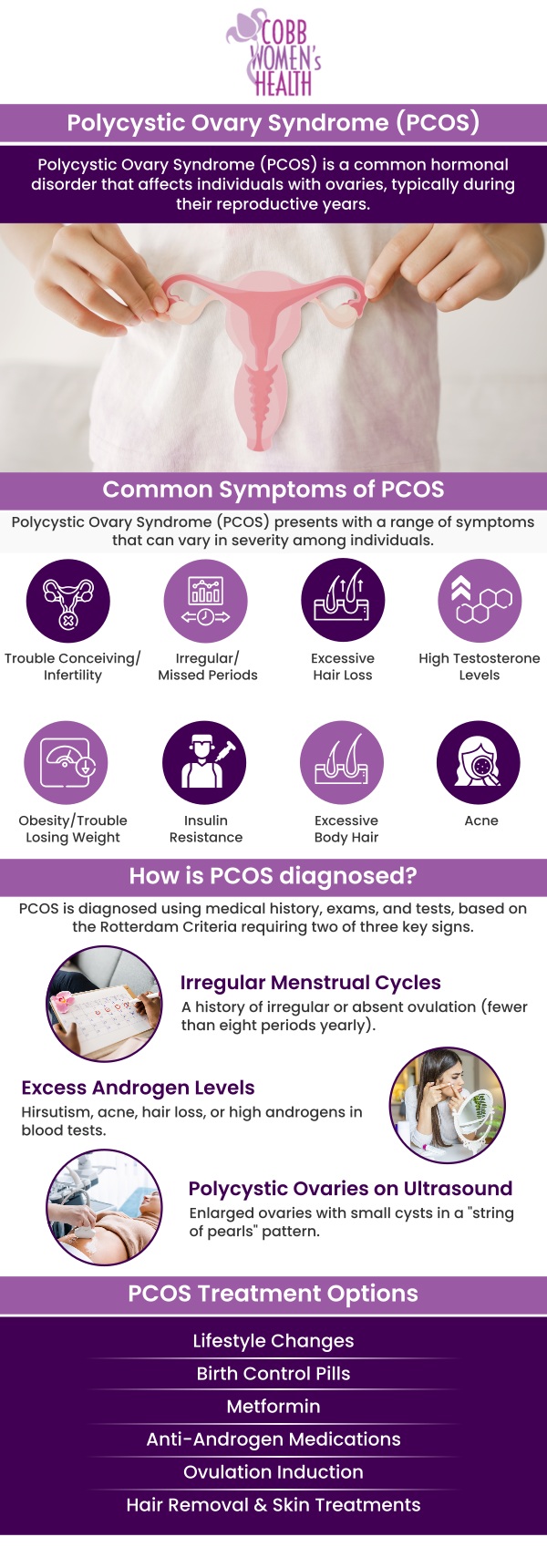
Table of Contents:
What is Polycystic Metabolic Ovarian Syndrome (PMOS)?
How is PMOS different from traditional PCOS?
What are the common symptoms of Polycystic Metabolic Ovarian Syndrome (PMOS)?
What are the long-term health risks of Polycystic Metabolic Ovarian Syndrome (PMOS)?
Where can I find a PMOS specialist in Austell, GA?
PMOS Management & Personalized Treatment with Dr. Mainthia and Dr. Hansalia at Cobb Women’s Health
Polycystic Ovary Syndrome (PCOS) is the established medical term for a complex hormonal and metabolic condition. The alternative term Polycystic Metabolic Ovarian Syndrome (PMOS) has been proposed to better reflect its broader effects on the body, including insulin resistance, hormonal imbalances, and metabolic health. Despite its name, PCOS does not necessarily involve true ovarian cysts; the characteristic ovarian findings are typically multiple small, underdeveloped follicles. This condition can affect menstrual regularity, ovulation, fertility, and long-term metabolic health. The proposed PMOS terminology emphasizes that PCOS is more than an ovarian condition. Throughout this page, we continue to use the widely recognized term PCOS while acknowledging PMOS as an alternative term used in discussions about the condition’s broader health implications.
Polycystic Metabolic Ovarian Syndrome (PMOS), traditionally known as Polycystic Ovary Syndrome (PCOS), is a hormonal and metabolic condition that can affect menstrual cycles, ovulation, fertility, and overall health. Common symptoms may include irregular periods, acne, unwanted hair growth, weight changes, and difficulty becoming pregnant.
Despite the traditional term “polycystic,” the ovarian findings associated with the condition are generally small, underdeveloped follicles rather than true cysts. PCOS highlights the broader nature of the condition, including its connection with insulin resistance, hormonal imbalance, and metabolic function. These changes can affect blood sugar regulation, weight management, and reproductive health.
At Cobb Women’s Health, Board-Certified Dr. Nandita Mainthia, M.D., F.A.C.O.G., and Dr. Hitendra Hansalia, M.D., F.A.C.O.G., provide individualized evaluation and care for women with PMOS. Our team considers menstrual patterns, symptoms, reproductive goals, hormonal health, and metabolic factors when developing an appropriate management plan.
Polycystic Ovary Syndrome (PCOS) is the established medical term for a hormonal and metabolic condition that can affect menstrual cycles, ovulation, androgen levels, fertility, and other aspects of women’s health. The traditional name can sometimes create confusion because the small structures that may be visible on the ovaries are generally immature follicles rather than true ovarian cysts. Ovarian findings are also not present in every woman with PCOS.
Polycystic Metabolic Ovarian Syndrome (PMOS) is terminology used to place greater emphasis on the metabolic component of the condition. It highlights that concerns may extend beyond ovarian function and reproductive symptoms. Insulin resistance, changes in blood sugar regulation, weight-related concerns, and other metabolic factors can occur alongside menstrual irregularities, hormonal changes, and fertility difficulties.
At Cobb Women’s Health in Austell, GA, Board-Certified Dr. Nandita Mainthia, M.D., F.A.C.O.G., and Dr. Hitendra Hansalia, M.D., F.A.C.O.G., take a comprehensive approach to these concerns. Our team considers reproductive, hormonal, menstrual, and metabolic factors when evaluating each woman and developing an individualized management plan based on her symptoms and health goals.
The symptoms of Polycystic Metabolic Ovarian Syndrome (PMOS) can vary from woman to woman and may involve reproductive, hormonal, and metabolic health. Some women experience only a few symptoms, while others may notice several changes over time.
Common symptoms may include:
• Irregular, infrequent, or missed menstrual periods
• Difficulty with ovulation
• Difficulty becoming pregnant
• Acne or oily skin
• Unwanted facial or body hair growth
• Thinning hair or hair loss on the scalp
• Weight gain or difficulty managing weight
• Darkened areas of skin
• Changes associated with insulin resistance
At Cobb Women’s Health, Board-Certified Dr. Nandita Mainthia, M.D., F.A.C.O.G., and Dr. Hitendra Hansalia, M.D., F.A.C.O.G., evaluate menstrual patterns, symptoms, hormonal concerns, and metabolic factors. Our team provides individualized care to help manage PMOS symptoms while supporting reproductive, hormonal, and overall women’s health.
Polycystic Metabolic Ovarian Syndrome (PMOS) can have long-term effects that extend beyond menstrual and reproductive concerns. Because the condition involves both hormonal and metabolic changes, ongoing management can be important for protecting overall health. Individual risks vary depending on factors such as insulin resistance, weight, menstrual patterns, and family history.
Potential long-term health concerns may include:
• Persistent menstrual irregularities
• Fertility and ovulation difficulties
• Insulin resistance and blood sugar concerns
• High blood pressure
• Unhealthy cholesterol or lipid levels
• Increased risk of endometrial changes from infrequent periods
• Metabolic health concerns
• Sleep-related concerns
• Emotional and psychological effects
At Cobb Women’s Health, our team considers each woman’s reproductive, hormonal, and metabolic health when managing PMOS. Regular evaluation and personalized care can help identify changing health risks and support long-term wellness.
If you are looking for Polycystic Metabolic Ovarian Syndrome (PMOS) care in Austell, GA, choosing an experienced women’s health specialist can help address menstrual irregularities, hormonal concerns, fertility difficulties, and metabolic factors. A comprehensive evaluation can help determine how PMOS may be affecting your reproductive and overall health.
PMOS care may involve evaluating menstrual patterns, ovulation, hormonal changes, weight concerns, and metabolic factors such as insulin resistance. Based on these findings, an individualized management plan can be developed according to your symptoms, medical history, reproductive goals, and overall health needs.
At Cobb Women’s Health, we provide personalized care for women experiencing PMOS-related concerns. Our team evaluates menstrual patterns, hormonal changes, reproductive health, and metabolic factors to better understand each patient’s individual needs. We take the time to discuss your symptoms, health goals, and available management options so you can make informed decisions about your care. We accept a variety of insurance plans. Cobb Women’s Health is accepting new patients seeking PMOS management and comprehensive women’s health care in Austell, GA.
At Cobb Women’s Health in Austell, GA, Dr. Nandita Mainthia, M.D., F.A.C.O.G., and Dr. Hitendra Hansalia, M.D., F.A.C.O.G., provide personalized care for Polycystic Metabolic Ovarian Syndrome (PMOS). With more than 30 years of experience, Board-Certified Gynecologist Dr. Mainthia provides comprehensive women’s health care tailored to each patient’s symptoms and individual needs. Her approach considers menstrual patterns, hormonal changes, reproductive health, metabolic factors, and fertility goals when developing an individualized management plan.
Dr. Hansalia also provides comprehensive care for women experiencing PMOS-related concerns, including menstrual irregularities, hormonal imbalances, metabolic changes, and fertility difficulties. He works with each patient to understand how the condition is affecting her health and determine appropriate strategies for symptom management and long-term wellness. At Cobb Women’s Health, Dr. Mainthia and Dr. Hansalia take an individualized approach to PMOS management, helping women support their reproductive, hormonal, and metabolic health at different stages of life. For more information, contact us today or request an appointment online. We are conveniently located at 1810 Mulkey Rd SW Suite 102, Austell, GA 30106! We serve patients from Austell GA, Lithia Springs GA, Mableton GA, Powder Springs GA, Fair Oaks GA, Hiram GA, Clarkdale GA, Smyrna GA, Marietta GA and surrounding areas.

Check Out Our 5 Star Reviews


Additional Services You May Need


 Send Text
 How May I Help You?

