

Endometrial Biopsy Specialist in Austell, GA
An endometrial biopsy is a procedure in which a small sample of the uterine lining is removed for examination. It is typically performed to evaluate abnormal bleeding, detect uterine infections, or assess the risk of endometrial cancer. The procedure is minimally invasive and can be done in a healthcare provider’s office. At Cobb Women’s Health, board-certified gynecologists Dr. Nandita Mainthia, MD, FACOG, and Dr. Hitendra Hansalia, MD, FACOG, provide expert care and accurate results for your endometrial biopsy needs. Contact us for more information or schedule an appointment online. We are conveniently located at 1810 Mulkey Rd SW Suite 102, Austell, GA 30106!
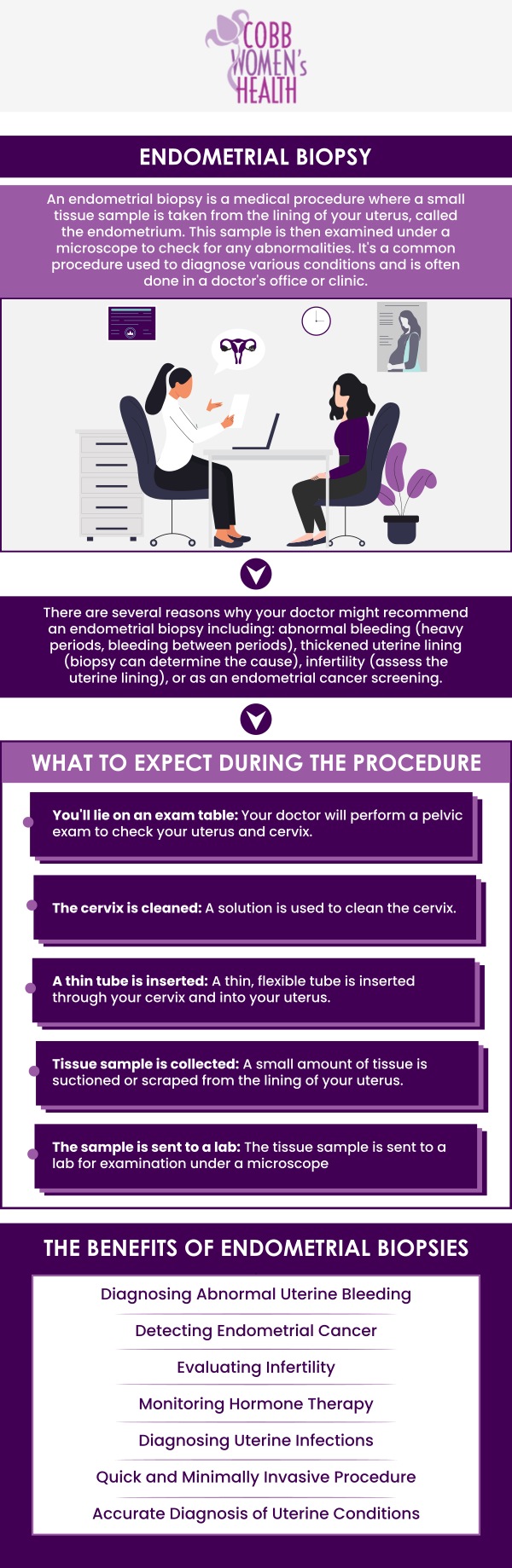
Table of Contents:
What does an endometrial biopsy test for?
Why would a doctor do an endometrial biopsy?
What can I expect after an endometrial biopsy?
How long is recovery from the endometrial biopsy?
An endometrial biopsy is a diagnostic procedure used to examine the lining of the uterus to assess the severity of a disease or monitor the effectiveness of a treatment. During the procedure, a small sample of the uterine lining is collected and sent to a laboratory for analysis. This examination helps identify any changes in the endometrium that may indicate reproductive disorders or other health concerns. Endometrial biopsies are commonly performed when a woman experiences abnormal uterine bleeding, such as heavy periods or spotting. This procedure plays a crucial role in the diagnostic process, providing valuable insights into the health of the uterus and aiding in the determination of appropriate treatment options.
An endometrial biopsy is a diagnostic procedure that tests for changes in the endometrium, the mucous membrane that lines the uterus. This test is commonly used to assess various aspects of menstrual and reproductive health. It can provide critical information about the underlying causes of abnormal bleeding or other symptoms affecting the uterus. During the procedure, a small sample of the uterine lining is removed and analyzed in a laboratory to detect any irregularities or signs of disease.
One of the primary reasons for performing an endometrial biopsy is to investigate abnormal uterine bleeding, which may include symptoms such as heavy or prolonged menstrual periods, irregular cycles, or spotting between periods. For women experiencing bleeding after menopause, this test is particularly valuable in determining the cause, as postmenopausal bleeding can indicate conditions such as endometrial hyperplasia or even endometrial cancer.
Another key reason for conducting an endometrial biopsy is to evaluate the thickness of the uterine lining, which is often identified through ultrasound imaging. A thickened endometrium can sometimes be a sign of underlying issues, including hormonal imbalances or uterine disorders. The biopsy can help confirm the diagnosis and provide clarity on whether further treatment or interventions are necessary.
Additionally, an endometrial biopsy can be used to monitor the effectiveness of certain treatments, such as hormone therapy or medications aimed at addressing abnormal uterine conditions. By providing a detailed analysis of the endometrial tissue, this procedure plays an essential role in diagnosing conditions that may affect fertility or overall reproductive health.
If you’re experiencing abnormal bleeding or other concerning symptoms, an endometrial biopsy performed by experienced, board-certified gynecologists, such as Dr. Nandita Mainthia, M.D., F.A.C.O.G, and Dr. Hitendra Hansalia, M.D., F.A.C.O.G., at Cobb Women’s Health, can help identify the cause and guide the next steps for treatment.
An endometrial biopsy is performed to diagnose abnormalities within the uterus or to rule out other potential health concerns. This procedure is essential in providing clarity for various reproductive and menstrual issues. The most common reasons a doctor might recommend an endometrial biopsy include:
Investigating Postmenopausal Bleeding or Abnormal Uterine Bleeding: If a woman experiences bleeding after menopause or irregular bleeding patterns, an endometrial biopsy can help determine the cause, such as endometrial hyperplasia or cancer.
Screening for Endometrial Cancer: If there is suspicion of endometrial cancer, especially in women with abnormal bleeding, this biopsy can provide vital information to confirm or rule out the presence of cancerous cells.
Evaluating Fertility: For women experiencing difficulty with conception, an endometrial biopsy can help assess the health of the uterine lining and determine if there are any issues that could be affecting fertility.
Testing the Response to Hormone Therapy: If a woman is undergoing hormone treatment for conditions like endometriosis or fibroids, an endometrial biopsy can be used to monitor the uterine lining’s response to the therapy.
However, there are certain conditions where an endometrial biopsy is contraindicated. It cannot be performed during pregnancy or if the patient has the following conditions:
Blood Clotting Disorders: Women with blood clotting disorders may face increased risk of bleeding during the biopsy.
Acute Pelvic Inflammatory Disease: Infections or inflammation in the reproductive organs can complicate the procedure.
Acute Cervical or Vaginal Infections: Infections of the cervix or vagina can make an endometrial biopsy unsafe.
Cervical Cancer or Cervical Stenosis (Narrowing of the Cervix): These conditions may interfere with the procedure’s ability to collect an adequate sample or increase the risk of complications.
At Cobb Women’s Health, Board-Certified Gynecologists Dr. Nandita Mainthia, M.D., F.A.C.O.G, and Dr. Hitendra Hansalia, M.D., F.A.C.O.G, specialize in performing endometrial biopsies with care and precision to help diagnose and address any concerns regarding your uterine health.
After the procedure, if the patient had any type of sedative, they will need someone to drive them home. A common side effect of the procedure is vaginal bleeding, so it is typically recommended to wear a sanitary pad for bleeding. For a few days after the procedure, it is normal to have some mild cramping and spotting or vaginal bleeding. To manage pain, over-the-counter pain relievers may be taken, as advised by a healthcare provider. It is important to note that aspirin and certain other pain medicines may increase the chance of bleeding, so it is imperative to avoid any blood-thinning medicines that could lead to blood loss. Other recommendations include:
• Do not douche, use tampons or have sex for 2 to 3 days after an endometrial biopsy; a different time period to avoid these activities may be provided by the physician, so it is important to follow their instruction
• There may be other limits, such as on activity level; this typically includes no strenuous activity, overexertion or heavy lifting
• Normal diet may be resumed after the procedure, unless otherwise informed by the healthcare provider
The endometrial biopsy specialist will discuss with the patient when to return for further treatment or care. Please let the healthcare provider know if any of the following occur after the procedure:
• Excessive bleeding
• Bleeding that lasts longer than 2 days
• Foul-smelling drainage/discharge from the vagina
• Fever or chills
• Severe lower belly pain
There may be other instructions after the procedure, based on the unique circumstances of each situation.
An endometrial biopsy is a minimally invasive procedure that typically involves little downtime compared to more invasive procedures like dilation and curettage (D&C), which require surgery. Recovery from an endometrial biopsy is generally quick, with most women resuming their normal activities within a few days.
After the procedure, it is common to experience light bleeding or spotting. It’s recommended to wear a sanitary pad for a few days to manage this bleeding, but tampons should be avoided as they can introduce bacteria and interfere with the healing process. The cervix and uterus may still be sensitive following the biopsy, so it’s essential to follow your doctor’s advice regarding sanitary products.
Mild cramping is also common following the procedure, similar to menstrual cramps. Over-the-counter pain relievers can be used to alleviate discomfort, but it’s important to consult your physician before taking any medication. If cramping or bleeding persists beyond a few days or if you experience severe pain, fever, or signs of infection, it’s crucial to contact your healthcare provider.
In general, most women can return to their normal daily activities, including work, after just a few days of rest. However, heavy physical activity or sexual intercourse should be avoided for a short period to allow for proper healing. If you have concerns about recovery or experience any complications, it’s always best to reach out to your doctor for guidance.
If you are experiencing reproductive health complications, come to Cobb Women’s Health for a thorough and accurate diagnosis.
If you’re experiencing abnormal uterine bleeding, such as heavy periods, spotting between cycles, or bleeding after menopause, an endometrial biopsy may be necessary to determine the underlying cause. At Cobb Women’s Health in Austell, GA, Board-Certified Gynecologists Dr. Nandita Mainthia, M.D., F.A.C.O.G, and Dr. Hitendra Hansalia, M.D., specialize in diagnosing and treating uterine issues using endometrial biopsies. This minimally invasive procedure involves taking a small sample of the uterine lining to check for abnormalities, such as endometrial cancer, hyperplasia, or other reproductive disorders.
Endometrial biopsies are critical for women who have not found relief from abnormal bleeding with medications or other treatments. Dr. Mainthia and Dr. Hansalia provide compassionate care and personalized treatment plans to ensure you receive the best possible care. If you’re looking for an expert gynecologist to help identify the cause of your abnormal uterine bleeding and discuss your treatment options, schedule a consultation with our team today. With the guidance of experienced, Board-Certified specialists, you can take the first step toward improved reproductive health and well-being. Contact us for more information or schedule an appointment online. We are conveniently located at 1810 Mulkey Rd SW Suite 102, Austell, GA 30106! We serve patients from Austell GA, Lithia Springs GA, Mableton GA, Powder Springs GA, Fair Oaks GA, Hiram GA, Clarkdale GA, Smyrna GA, Marietta GA and surrounding areas.

Check Out Our 5 Star Reviews


Additional Services You May Need


 Send Text
 How May I Help You?
