

Early Signs of Endometriosis You Shouldn’t Ignore
At Cobb Women’s Health, board-certified Dr. Nandita Mainthia, MD, FACOG, and Dr. Hitendra Hansalia, MD, FACOG, provide personalized gynecological care for women experiencing possible signs of endometriosis. Early symptoms may include severe menstrual cramps, persistent pelvic pain, painful intercourse, heavy periods, and discomfort during bowel movements. Recognizing these warning signs can help women seek timely medical evaluation and appropriate treatment. Our team carefully assesses each patient’s symptoms, menstrual history, and overall health to recommend individualized care options that support symptom management, reproductive health, and long-term well-being. Contact us for more information or schedule an appointment. We are conveniently located at 1810 Mulkey Rd SW, Suite 102, Austell, GA 30106.
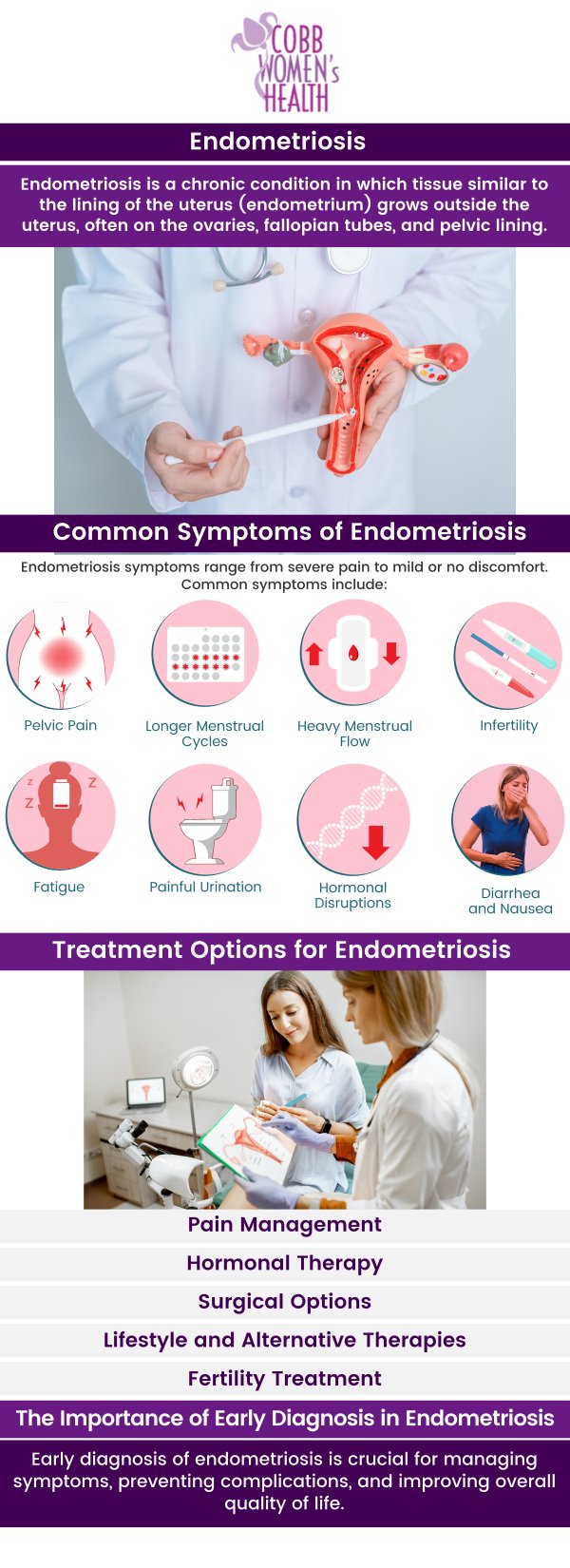
Table of Contents:
What Are the Most Common Signs of Endometriosis?
The “Silent” and Overlooked Symptoms
Normal Period Pain vs. Endometriosis: How to Tell the Difference
When should you see a gynecologist?
How We Diagnose and Treat Endometriosis at Cobb Women’s Health
What is usually the very first sign of endometriosis?
Can you have endometriosis and have no symptoms at all?
At what age do signs of endometriosis typically start?
Can a normal pelvic ultrasound show signs of endometriosis?
Does pregnancy cure endometriosis?
Endometriosis, a chronic illness that affects around 10% of women of reproductive age, may be demonstrated by intense menstrual pain that gets in the way of everyday activities. Because symptoms vary and often resemble other conditions, diagnosis may be delayed. Recognizing the early signs of endometriosis can help women seek timely care, manage symptoms, and protect their reproductive health.
Endometriosis presents differently in every woman, but several hallmark symptoms frequently point to the condition.
• Severe Pelvic Pain (More Than Just “Bad Cramps”): While mild cramping is typical, endometriosis causes severe pelvic pain (dysmenorrhea). This pain might start days before your period, last long after it ends, and refuse to subside with standard over-the-counter medications.
• Pain During or After Intercourse (Dyspareunia): Deep pelvic pain during or following sex is very common. It is typically described as a deep internal ache rather than entrance pain, caused by the physical stretching of affected tissues.
• Painful Bowel Movements or Urination: Experiencing sharp, stabbing pains when using the restroom—especially during menstruation—could indicate that endometrial tissue has grown on or around your bowel or bladder.
• Heavy or Irregular Menstrual Bleeding: Women with endometriosis often experience unusually heavy periods requiring frequent pad or tampon changes, passing large clots, or unexpected bleeding and spotting between periods.
• Unexplained Infertility: Sometimes, a woman has no physical pain at all and only discovers the condition after struggling to get pregnant. Endometriosis causes internal scarring and inflammation that can impair reproductive function, though with treatment, many women go on to have healthy pregnancies.
Not all signs are directly tied to your menstrual cycle. Some fly under the radar or are misdiagnosed as other health issues.
• “Endo Belly” (Severe Bloating and Digestive Issues): This isn’t your standard PMS bloating. “Endo belly” refers to severe, painful abdominal swelling. Often accompanied by nausea, diarrhea, or constipation, it is frequently misdiagnosed as Irritable Bowel Syndrome (IBS).
• Chronic Lower Back and Leg Pain: Endometrial tissue growing near pelvic nerves can cause intense, radiating pain that shoots down your lower back and into your legs, sometimes mimicking conditions like sciatica.
• Persistent Fatigue: Chronic pain and internal inflammation put a massive, continuous strain on your body.
Determining what “normal” pain is can sometimes be challenging. Standard period cramps are mild to moderate, begin shortly before your period, and resolve within a few days. They usually respond beautifully to a heating pad. Endometriosis pain, however, is severely disruptive. If your pain forces you to miss work or school, causes you to vomit or pass out, or persists throughout the entire month, it crosses the line from normal cramps to a potential medical condition.
You know your body best. If you are experiencing these symptoms, do not suffer in silence. Schedule an appointment with a gynecologist if your pelvic pain regularly interferes with your daily activities, if sex is continuously painful, or if you have been trying to conceive without success for over a year. Early medical intervention can effectively prevent the disease from progressing.
At Cobb Women’s Health, we understand how frustrating, isolating, and exhausting endometriosis can be. We listen to our patients, take your symptoms seriously, and validate your pain. Diagnosis begins with a comprehensive pelvic exam and advanced imaging, and may involve a minimally invasive laparoscopy for definitive confirmation. From there, we work together to build a customized, personalized treatment plan—ranging from targeted hormonal therapies to advanced surgical options—designed to alleviate your pain and support your family planning goals.
What is usually the very first sign of endometriosis?
One of the earliest signs of endometriosis is severe menstrual cramping that may worsen over time. In addition, some women have heavy bleeding, difficulty during bowel movements, or pelvic pain before or after their periods.
Yes, some women have endometriosis without experiencing noticeable symptoms. In these cases, the condition may be discovered during an evaluation for fertility concerns or an unrelated pelvic condition.
The earliest indications of endometriosis may appear during the teenage years, sometimes shortly after menstruation begins. However, related discomfort and other warning signs can emerge or intensify at various stages of a woman’s childbearing years.
A pelvic ultrasound may detect ovarian cysts associated with endometriosis, but it cannot reliably identify all forms of the condition. A normal ultrasound does not rule out endometriosis, particularly when smaller or superficial lesions are present.
No, pregnancy does not cure endometriosis, although hormonal changes during pregnancy may temporarily reduce symptoms for some women. Symptoms can return after childbirth or when menstrual cycles resume.
Contact us for more information or schedule an appointment. We are conveniently located at 1810 Mulkey Rd SW, Suite 102, Austell, GA 30106. We serve patients from Austell GA, Lithia Springs GA, Mableton GA, Powder Springs, GA, Fair Oaks GA, Hiram GA, Clarkdale GA, Smyrna GA, Marietta, GA, and surrounding areas.

Check Out Our 5 Star Reviews


Additional Services You May Need


 Send Text
 How May I Help You?

