

What Causes Endometriosis?
While the exact cause of endometriosis remains unknown, medical experts believe it is driven by factors like retrograde menstruation, cellular mutations, and immune system imbalances. These underlying mechanisms allow endometrial-like tissue to misplace, implant, and grow on pelvic organs, leading to chronic inflammation and severe discomfort. At Cobb Women’s Health, Board-certified gynecologists, Dr. Nandita Mainthia, M.D., F.A.C.O.G, and Dr. Hitendra Hansalia, MD, work closely with patients to explore these potential triggers and decode their unique symptoms. For more information, contact us today or schedule an appointment online. We are conveniently located at 1810 Mulkey Rd SW, Suite 102, Austell, GA 30106.
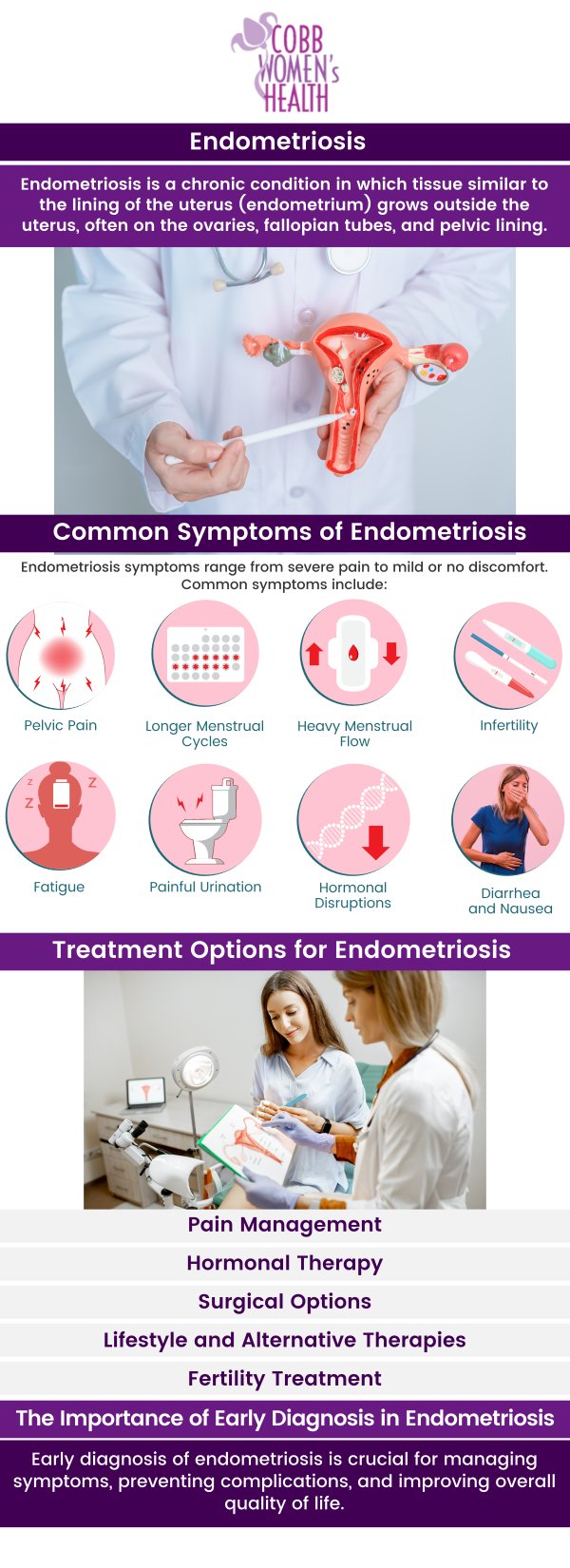
Table of Contents:
What are the first signs of endometriosis?
What are the common causes of endometriosis?
Can hormonal imbalances lead to endometriosis?
How does the menstrual cycle contribute to endometriosis?
How Cobb Women’s Health Can Help Manage Endometriosis with Dr. Nandita Mainthia and Dr. Hitendra Hansalia
Endometriosis is a chronic gynecological condition in which tissue similar to the lining inside the uterus grows outside the uterus, often leading to a variety of early signs and symptoms. At Cobb Women’s Health, our experienced providers are dedicated to helping women in the Cobb County area recognize and manage endometriosis as early as possible for better long-term outcomes.
One of the first and most common signs of endometriosis is pelvic pain. Many of our patients describe this pain as significantly more intense than typical menstrual cramps. It often begins before the period starts and can persist throughout the menstrual cycle. If you are experiencing pelvic pain that interferes with your daily activities, it’s important to schedule an appointment with one of our specialists.
Heavy menstrual bleeding or bleeding between periods is another early indication of endometriosis. You may notice unusually heavy periods, prolonged periods, or spotting at irregular times. Pain during intercourse is also a frequent early symptom; many women report discomfort or sharp pain during or after sex. If you are experiencing any of these symptoms, the compassionate team at Cobb Women’s Health is here to help.
Other signs can include pain during bowel movements or urination, especially around the time of menstruation. Some women may also notice fatigue, digestive issues such as diarrhea, constipation, bloating, or nausea, particularly during their periods. Because symptoms vary from person to person, some women with endometriosis might only have mild symptoms or none at all.
If you notice new, persistent, or severe menstrual pain, changes in your menstrual cycle, or pain during sex or bowel movements, we encourage you to contact Cobb Women’s Health. Our providers offer comprehensive evaluations, advanced diagnostic tools, and personalized treatment options to help you manage symptoms and protect your reproductive health. Early recognition and treatment are key to living well with endometriosis—let Cobb Women’s Health be your partner in care.
At Cobb Women’s Health, we recognize that endometriosis is a chronic and often challenging condition affecting many women in our community. Endometriosis occurs when tissue similar to the lining of the uterus grows outside the uterine cavity, leading to pelvic pain, painful periods, and sometimes fertility concerns. While the exact cause of endometriosis isn’t fully understood, our providers stay up-to-date on the latest research to help guide diagnosis and care.
Potential Causes of Endometriosis:
• Retrograde Menstruation: One commonly discussed cause is retrograde menstruation, where menstrual blood flows backward through the fallopian tubes into the pelvic cavity. This process can allow endometrial-like cells to implant outside the uterus, causing inflammation and pain.
• Genetic Factors: Women with a family history of endometriosis, such as a mother or sister with the condition, are at a higher risk. At Cobb Women’s Health, we take your family history into account during your evaluation, as genetics may play a role in your risk profile.
• Immune System Disorders: An impaired immune system may not recognize and destroy endometrial tissue growing outside the uterus, allowing it to persist and cause symptoms. Our team can help assess if immune function might be contributing to your symptoms.
• Hormonal Imbalances: Estrogen, a hormone that regulates the menstrual cycle, can stimulate the growth of endometrial tissue. Hormonal imbalances may exacerbate endometriosis, and our providers can discuss hormonal management options tailored to your needs.
• Surgical History: In some cases, previous surgeries such as cesarean sections or hysterectomies can lead to endometrial cells attaching to surgical scars, resulting in localized endometriosis.
Our Approach at Cobb Women’s Health
Understanding the multiple factors that contribute to endometriosis helps us provide comprehensive, individualized care. Whether you are struggling with pelvic pain, heavy periods, or fertility concerns, our experienced team is here to help. We offer advanced diagnostic tools and a range of treatment options to help manage your symptoms and improve your quality of life.
If you have questions about endometriosis or would like to schedule a consultation, please contact Cobb Women’s Health. We are committed to supporting you on your journey to better health.
At Cobb Women’s Health, we understand that endometriosis is a complex condition that affects many women in our community. Endometriosis occurs when tissue similar to the lining of the uterus (endometrial tissue) grows outside the uterus, leading to symptoms like pelvic pain, heavy periods, and sometimes infertility.
Hormonal imbalances, particularly involving estrogen and progesterone, play a significant role in the development and progression of endometriosis. Estrogen, a key female hormone, encourages the growth of endometrial tissue. In women with endometriosis, these tissues outside the uterus often respond strongly to estrogen, causing them to grow and bleed with each menstrual cycle. Research also suggests that these growths may produce extra estrogen locally, which can make the condition worse.
Normally, progesterone helps keep estrogen’s effects in balance. However, many women with endometriosis experience what’s known as “progesterone resistance,” meaning their bodies aren’t able to use progesterone effectively. This imbalance allows endometrial tissue to grow unchecked outside the uterus.
It’s important to know that while hormones are a major factor, genetics, immune system health, and environmental factors also play roles in endometriosis. At Cobb Women’s Health, our experienced providers take a comprehensive approach to diagnosis and treatment. We offer advanced medical therapies that target hormonal imbalances, including options to lower estrogen levels or enhance progesterone activity, with the goal of reducing your symptoms and improving your quality of life.
If you suspect you may have endometriosis or are struggling with symptoms like pelvic pain or irregular cycles, we encourage you to schedule an appointment with our caring team at Cobb Women’s Health. We’re here to provide expert evaluation, answer your questions, and develop a personalized treatment plan that’s right for you.
Your health and well-being are our top priorities. Let us help you take control of your hormonal health and find relief from endometriosis.
At Cobb Women’s Health, we understand that the menstrual cycle plays a crucial role in the development and progression of endometriosis—a condition that affects many women in our community. Each month, the endometrial lining inside the uterus thickens in preparation for a possible pregnancy. If pregnancy does not occur, this lining is shed during menstruation.
For women with endometriosis, however, some endometrial-like tissue grows outside the uterus, often affecting the ovaries, fallopian tubes, and surrounding pelvic organs. One leading theory, known as retrograde menstruation, suggests that menstrual blood can flow backward through the fallopian tubes and into the pelvic cavity. This allows endometrial cells to implant and grow outside the uterus.
These cells continue to respond to the hormonal changes of the menstrual cycle, thickening and breaking down just like the normal uterine lining. However, because this tissue has no way to exit the body, it can cause inflammation, irritation, and scar tissue formation, leading to pain, fertility challenges, and other symptoms that can disrupt daily life.
At Cobb Women’s Health, our experienced team is dedicated to diagnosing and managing endometriosis with a compassionate, personalized approach. If you’re experiencing pelvic pain, heavy periods, or other symptoms of endometriosis, we’re here to help you find answers and relief. The menstrual cycle is more than just a monthly event—it can be a key factor in ongoing symptoms and the persistence of endometriosis. Let our caring providers support you in understanding your health and exploring your best treatment options.
Managing the chronic pain and systemic symptoms of endometriosis requires a dedicated, localized approach that prioritizes long-term relief and wellness. At Cobb Women’s Health in Austell, GA, we provide comprehensive, personalized care for individuals dealing with pelvic discomfort across Cobb County, including Marietta, Smyrna, and Mableton. Our clinic specializes in advanced medical management strategies, such as tailored hormonal therapies and targeted lifestyle modifications, designed to slow tissue growth and soothe internal inflammation. By focusing on non-invasive, proactive solutions, we help local patients reduce painful flare-ups, manage chronic fatigue, and significantly improve their day-to-day quality of life.
At Cobb Women’s Health, Board-certified gynecologists, Dr. Nandita Mainthia, M.D., F.A.C.O.G, and Dr. Hitendra Hansalia, MD, are committed to delivering compassionate, expert guidance to patients from Powder Springs, Lithia Springs, and the surrounding areas. Our providers understand that endometriosis affects both physical comfort and mental health, which is why they take the time to evaluate your unique symptoms and create an individualized care plan that works for your body. From diagnosing the root causes of painful intercourse to providing ongoing hormonal support, our team is here to walk with you every step of the way. For more information, contact us today or schedule an appointment online. We are conveniently located at 1810 Mulkey Rd SW, Suite 102, Austell, GA 30106. We serve patients from Austell GA, Lithia Springs GA, Mableton GA, Powder Springs GA, Fair Oaks GA, Hiram GA, Clarkdale GA, Smyrna GA, Marietta GA and surrounding areas.

Check Out Our 5 Star Reviews


Additional Services You May Need


 Send Text
 How May I Help You?
