

How Often Should You Get a Pap Smear?
Protecting your reproductive health starts with knowing your optimal Pap smear schedule. Because modern medical guidelines have shifted from annual testing to a precise three-to-five-year interval, getting personalized advice is more important than ever. To create a preventative care plan that perfectly aligns with your age and medical history, schedule a visit at Cobb Women’s Health, Board-certified gynecologists, Dr. Nandita Mainthia, M.D., F.A.C.O.G, and Dr. Hitendra Hansalia, MD. Contact us today for more information or request an appointment online. We are conveniently located at 1810 Mulkey Rd SW Suite 102, Austell, GA 30106.
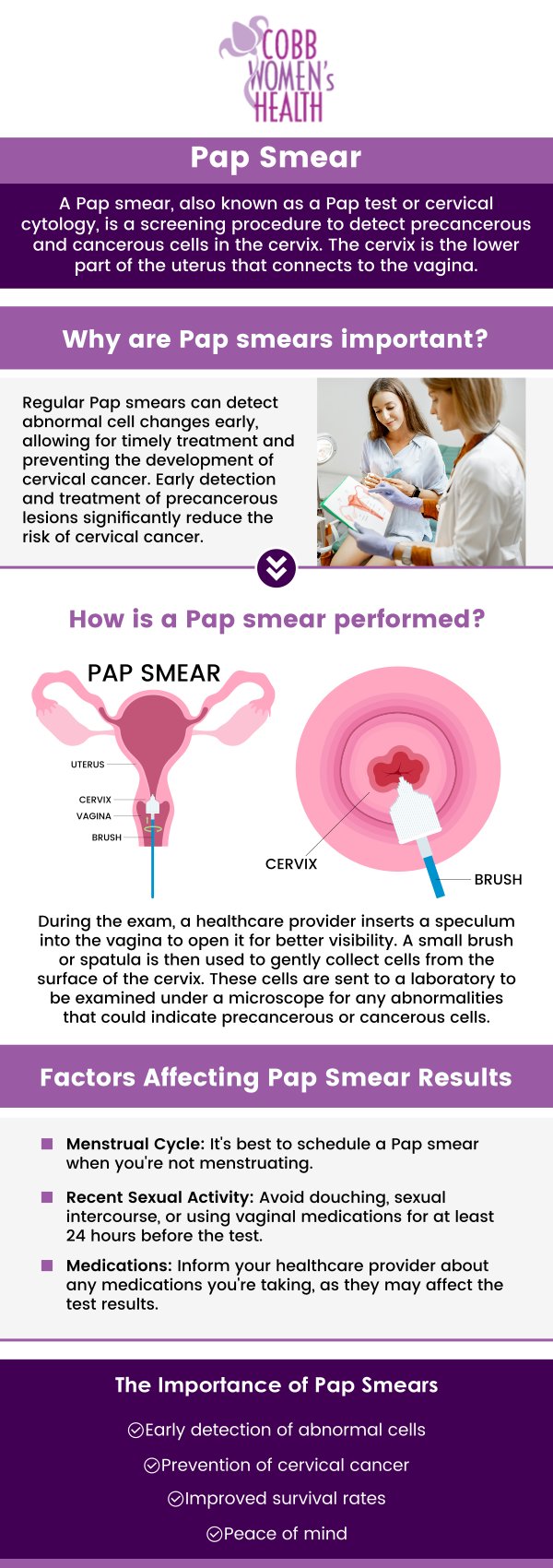
Table of Contents:
How often should I get a Pap smear?
What is the recommended frequency of Pap smears for women aged 21–29?
Do I still need a Pap smear if I’ve had a hysterectomy?
How soon after an abnormal Pap smear should I get another test?
Pap Smear Frequency for Every Age at Cobb Women’s Health, Board-certified gynecologists, Dr. Nandita Mainthia, M.D., F.A.C.O.G, and Dr. Hitendra Hansalia, MD
Understanding when to schedule a Pap smear can be confusing, as medical guidelines have evolved significantly over the past few decades. In the past, it was standard to receive a Pap smear every year during a woman’s annual well-woman visit. However, recent guidelines recommend that most women with average risk for cervical cancer can safely reduce testing to every three to five years. This change comes from a better understanding of cervical cancer development, which typically takes years to develop from an HPV infection. Screening too frequently can result in the overtreatment of harmless infections or minor cell abnormalities that the immune system can naturally clear.
This shift aims to reduce unnecessary treatments and the risks associated with them, such as scarring on the cervix, which could lead to complications like preterm labor in the future. Even though the frequency of Pap smears has changed, it’s important to continue with your annual gynecological exam. These exams include a pelvic exam, breast exam, STI screenings, preventive health counseling, and reproductive health check-ups. So, while the Pap smear schedule has shifted, the importance of yearly visits remains.
For women aged 21 to 29, the American College of Obstetricians and Gynecologists (ACOG) and the Centers for Disease Control and Prevention (CDC) recommend having a Pap smear every three years. This recommendation is based on the fact that most young women who are sexually active may contract HPV, but their immune systems can typically clear the virus on their own. Cervical cancer in this age group is exceptionally rare, and early screening often leads to false alarms and unnecessary procedures. Therefore, delaying screening until age 21 and spacing it out every three years ensures that doctors only intervene when necessary.
HPV co-testing, where a test for high-risk HPV is conducted alongside a Pap smear, is generally not recommended for women in this age group. Since HPV is so common in women under 30, a positive HPV result often causes undue stress without providing any additional clinical benefit. HPV testing is only introduced if a Pap smear shows abnormal results, in which case it helps to determine the next steps for further evaluation.
Whether you still need a Pap smear after having a hysterectomy depends on the type of hysterectomy and the reason it was performed. If you had a partial hysterectomy, or supracervical hysterectomy, where the cervix is left intact, you must continue to get Pap smears as you would before the surgery. Since the cervix is still present, your risk for cervical cancer remains, and routine screening should continue based on your age and medical history.
However, if you had a total hysterectomy, meaning both the uterus and cervix were removed, and the surgery was done for non-cancerous reasons, such as fibroids or endometriosis, you may no longer need Pap smears. If the surgery was performed due to cervical cancer or precancerous changes, you still need ongoing screening. Even after a hysterectomy, abnormal cells can develop in the vaginal cuff, the area where the cervix was removed, and regular screening is needed to monitor for potential issues.
If your Pap smear results come back abnormal, it doesn’t necessarily mean you have cancer. Abnormal results often indicate mild changes that could be caused by a temporary HPV infection or minor inflammation. For low-grade abnormalities, such as ASC-US or LSIL, the doctor typically recommends waiting 12 months for a repeat Pap smear, especially for women under 25. This approach allows time for the body to clear the infection without intervention, as many mild changes resolve on their own.
For women over 25, an HPV test is often done alongside the Pap smear to determine if the abnormal results are related to a persistent HPV infection. If the HPV test is negative, the woman can return to her regular screening schedule. If the HPV test is positive, the doctor may recommend a colposcopy, an in-office procedure to examine the cervix more closely. For high-grade abnormalities, immediate follow-up is needed, and the doctor will typically schedule a colposcopy and possibly a biopsy to evaluate the extent of the abnormal cells.
At Cobb Women’s Health, Board-certified gynecologists Dr. Nandita Mainthia, M.D., F.A.C.O.G, and Dr. Hitendra Hansalia, M.D., prioritize personalized care based on the latest guidelines for cervical cancer screening. For women under 21, routine Pap smears are not recommended, as cervical cancer is exceptionally rare in this age group. Most HPV infections in young women are cleared naturally by the immune system, and early screening can lead to unnecessary treatments for non-cancerous changes. Once you turn 21, Dr. Mainthia and Dr. Hansalia recommend a Pap smear every three years to ensure any persistent abnormalities are detected without overtreating transient infections.
At Cobb Women’s Health, Dr. Mainthia and Dr. Hansalia ensure your cervical cancer screening schedule is customized to your health needs, providing the best preventative care for women of all ages. Contact us today for more information or request an appointment online. We are conveniently located at 1810 Mulkey Rd SW Suite 102, Austell, GA 30106. We serve patients from Austell GA, Lithia Springs GA, Mableton GA, Powder Springs, GA, Fair Oaks GA, Hiram GA, Clarkdale GA, Smyrna GA, Marietta, GA, and surrounding areas.

Check Out Our 5 Star Reviews


Additional Services You May Need


 Send Text
 How May I Help You?
