

FAQs About HPV Vaccine
Protecting yourself and your loved ones from preventable cancers starts with understanding the facts about the HPV vaccine. At Cobb Women’s Health, we are committed to providing you with accurate, empowering information so you can make confident healthcare decisions. Board-certified gynecologists, Dr. Nandita Mainthia, MD, FACOG, and Dr. Hitendra Hansalia, MD, FACOG, are here to guide you through every step of your preventative care journey. Contact us today for more information or request an appointment online. We are conveniently located at 1810 Mulkey Rd SW Suite 102, Austell, GA 30106.
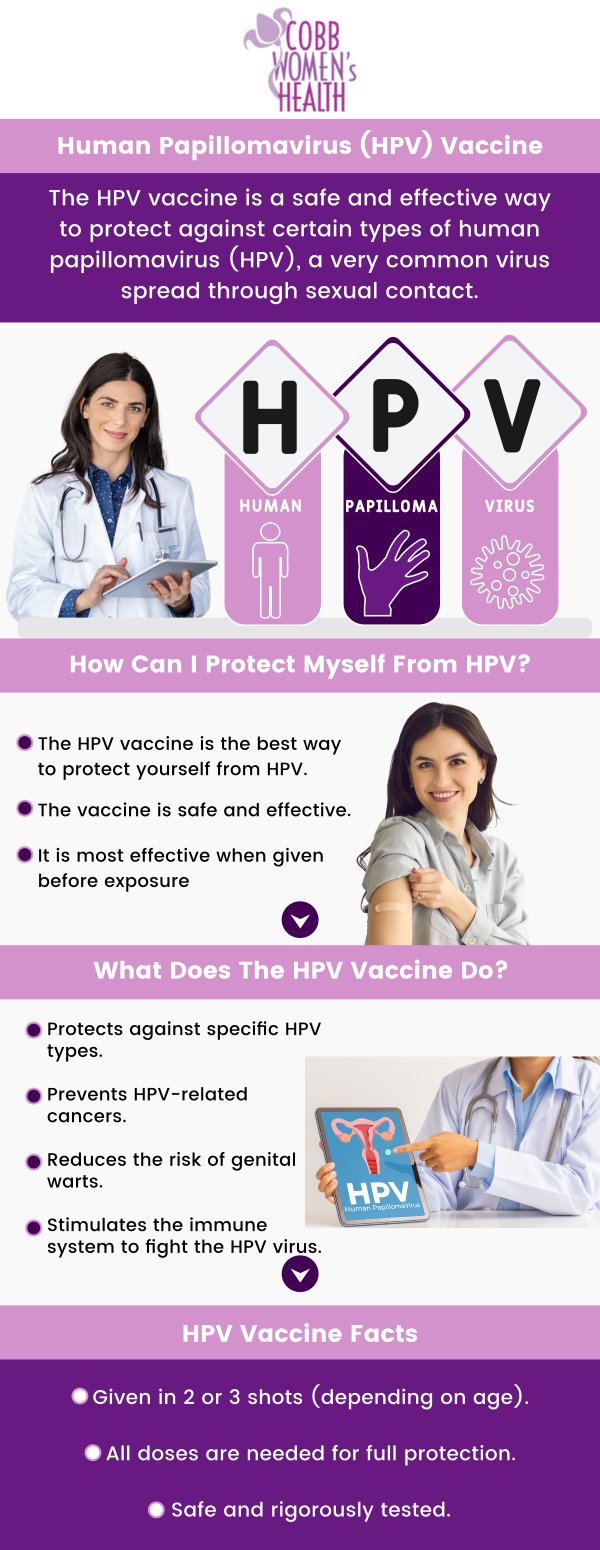
Table of Contents:
What is the HPV vaccine and how does it work?
Why should I get the HPV vaccine?
At what age should I get the HPV vaccine?
Is the HPV vaccine only for girls?
Can the HPV vaccine prevent all forms of cancer?
How many doses of the HPV vaccine are required?
What is the difference between the HPV vaccine and the HPV test?
Is the HPV vaccine safe for young adults?
Can the HPV vaccine be given to boys and men?
What are the side effects of the HPV vaccine?
What is the best time to get the HPV vaccine?
Does the HPV vaccine protect against genital warts?
How long does the protection from the HPV vaccine last?
Is the HPV vaccine covered by insurance?
What if I missed a dose of the HPV vaccine?
Can the HPV vaccine cause infertility?
How soon after getting the HPV vaccine should I expect protection?
What happens if I get the HPV vaccine after being exposed to the virus?
Your Health and Wellness is Our Priority
The HPV vaccine is a highly effective immunization designed to protect individuals against the human papillomavirus, a very common infection spread through intimate skin-to-skin contact. It works by introducing harmless, lab-created proteins that mimic the virus to your immune system. This safe exposure trains your body to produce targeted antibodies, ensuring that if you ever encounter the actual virus in the future, your immune system is already primed to fight it off before an infection can take hold.
Getting the HPV vaccine is one of the most proactive steps you can take for your long-term health. It significantly lowers your risk of developing several serious, and potentially life-threatening, types of cancer, including cervical, vaginal, vulvar, anal, and throat cancers. Beyond cancer prevention, it also offers robust protection against the specific viral strains that cause painful and persistent genital warts, providing comprehensive peace of mind.
The Centers for Disease Control and Prevention (CDC) strongly recommends that preteens receive the vaccine around ages 11 to 12. However, pediatricians can administer the vaccine as early as age 9. If you missed it during childhood, it is still highly recommended for teens and young adults up to age 26. Furthermore, the FDA has approved the vaccine for adults up to age 45, though older adults should discuss the potential benefits with their healthcare provider.
No, that is a common misconception. The HPV vaccine is highly recommended for both boys and girls. Because HPV is sexually transmitted, vaccinating everyone builds community immunity and helps halt the spread of the virus overall. Furthermore, it directly protects males against HPV-related conditions that can affect them, such as anal cancer, penile cancer, throat cancer, and genital warts.
While the HPV vaccine is an incredible tool for cancer prevention, it does not protect against all forms of cancer. It is specifically designed to target the high-risk strains of the human papillomavirus that are known to cause certain cancers. This includes nearly all cases of cervical cancer, as well as many vaginal, vulvar, penile, anal, and oropharyngeal (back of the throat) cancers. You should still continue routine cancer screenings, such as Pap smears, as recommended by your doctor.
The required number of doses depends entirely on the age at which the vaccination series is started. If the first shot is administered before a child’s 15th birthday, only two doses are needed, usually given six to twelve months apart. If the series is started at age 15 or older, or if the individual has a weakened immune system, a three-dose series is required to ensure optimal immune response.
These two tools serve entirely different purposes in your healthcare routine. The HPV vaccine is a preventative measure—a shot given in the arm to stop you from catching the virus in the first place. Conversely, the HPV test is a screening tool, typically performed alongside a Pap smear during a pelvic exam. It is used by gynecologists to detect the active presence of high-risk HPV DNA on the cervix to monitor for potential cellular changes.
Yes, the HPV vaccine is exceptionally safe for young adults. Before it was approved for public use, it underwent rigorous clinical trials involving tens of thousands of participants. Since its introduction, multiple health organizations worldwide, including the CDC and WHO, have continuously monitored its safety. Decades of data confirm that it is a safe, highly effective vaccine with a strong track record of protecting young adults from disease.
Absolutely. Vaccinating boys and men is a crucial part of a strong public health strategy. Men can both carry and suffer from the human papillomavirus. By receiving the vaccine, boys and men protect themselves directly against genital warts and devastating cancers like penile, anal, and throat cancers. Additionally, vaccinated men cannot pass the virus to their partners, helping to break the chain of transmission.
Like any medical injection, the HPV vaccine can cause side effects, but they are generally very mild and resolve quickly on their own. The most commonly reported issues are pain, redness, or swelling in the arm where the shot was given. Some patients may also experience a low-grade fever, mild headache, nausea, or a feeling of dizziness or fainting (which is why clinics often have patients sit for a few minutes after the shot).
The absolute best time to get the HPV vaccine is during the preteen years (ages 9 to 12). The vaccine is most effective when administered long before an individual becomes sexually active and is potentially exposed to the virus. Furthermore, research shows that preteens naturally produce a much stronger immune response to the vaccine compared to older teenagers and adults, offering them superior, long-lasting protection.
Yes, it provides excellent protection against genital warts. The most commonly administered version of the vaccine targets nine different strains of the virus. This includes HPV types 6 and 11, which are the specific strains responsible for causing over 90% of all genital wart cases. Getting vaccinated drastically reduces your chances of ever dealing with this uncomfortable condition.
Extensive clinical research and long-term monitoring indicate that the protection provided by the HPV vaccine is incredibly durable. Studies following vaccinated individuals for well over a decade show no signs that immunity wanes over time. Because the protection is so long-lasting and robust, medical experts do not currently recommend any booster shots once the initial series is fully completed.
In the vast majority of cases, yes. Under the Affordable Care Act, most private health insurance plans are required to cover preventative services, including the HPV vaccine, without any copay or out-of-pocket costs for individuals within the recommended age ranges. Additionally, public programs like Medicaid and the Vaccines for Children (VFC) program provide the vaccine at no cost to eligible families.
If you or your child misses a scheduled dose, there is no need to panic, and you do not have to restart the entire vaccination series from the beginning. Your immune system remembers the first dose. You simply need to contact your healthcare provider’s office to schedule the missed shot as soon as possible so you can complete the series and achieve full immunity.
No, there is absolutely no credible scientific or medical evidence suggesting that the HPV vaccine causes infertility in either women or men. In reality, the vaccine actually helps protect a woman’s fertility. By preventing HPV infections that lead to cervical pre-cancers, the vaccine helps women avoid invasive surgical treatments on the cervix that could potentially complicate future pregnancies.
Your immune system begins working to build antibodies almost immediately after receiving the very first shot. However, partial immunity is not enough to guarantee safety against the virus. To ensure you have maximum, long-lasting protection against all the strains included in the shot, you must complete the full recommended series (whether that is two or three doses) according to your doctor’s timeline.
If you have already been exposed to HPV, the vaccine cannot treat or cure that specific existing infection. However, doctors still highly recommend getting vaccinated anyway. Because there are many different strains of HPV, it is highly unlikely you have been exposed to all the strains the vaccine covers. The shot will still provide robust protection against the other high-risk types you haven’t encountered yet.
Navigating your reproductive health can sometimes feel overwhelming, but you don’t have to do it alone. At Cobb Women’s Health, Board-certified gynecologists Dr. Nandita Mainthia, M.D., F.A.C.O.G., and Dr. Hitendra Hansalia, M.D., are dedicated to providing compassionate, comprehensive, and personalized care for women at every stage of life. Whether you have further questions about the HPV vaccine, need to schedule your doses, or are due for your routine wellness exam, our experienced team is here to support you. Don’t wait to take charge of your preventative health—contact our Austell, GA clinic today to schedule an appointment. We serve patients from Austell GA, Lithia Springs GA, Mableton GA, Powder Springs GA, Fair Oaks GA, Hiram GA, Clarkdale GA, Smyrna GA, Marietta GA and surrounding areas.

Check Out Our 5 Star Reviews


Additional Services You May Need


 Send Text
 How May I Help You?
