

FAQs About D&C Procedure
A Dilation and Curettage (D&C) is a brief and routine procedure used to diagnose or treat various uterine conditions, such as abnormal bleeding. Whether you are preparing for an upcoming appointment or navigating your recovery, having clear and accurate answers can significantly ease your mind. Our comprehensive FAQs address your most pressing questions regarding the procedure steps, recovery timelines, and essential self-care instructions. At Cobb Women’s Health, Board-certified gynecologists, Dr. Nandita Mainthia, M.D., F.A.C.O.G, and Dr. Hitendra Hansalia, MD, are here to ensure you feel fully informed, confident, and supported every step of the way. For more information, contact us today or schedule an appointment online. We are conveniently located at 1810 Mulkey Rd SW Suite 102, Austell, GA 30106.
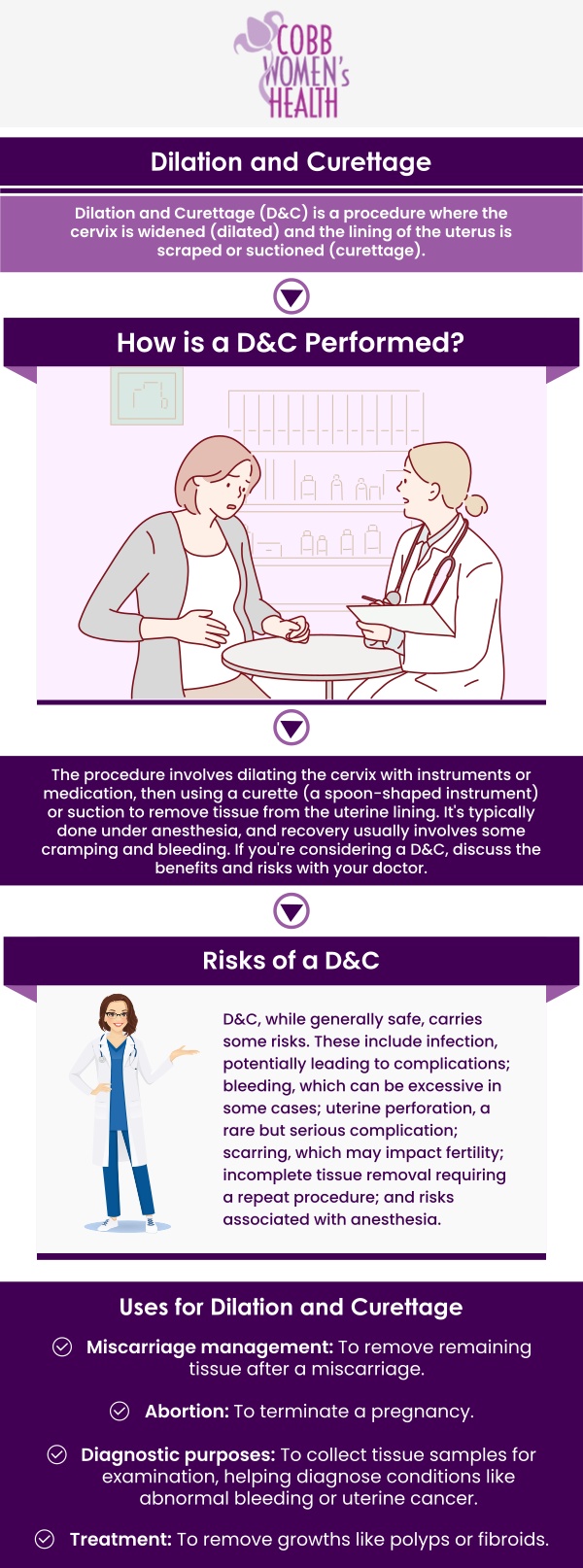
Table of Contents:
Why is a D&C procedure performed?
What are the common reasons for needing a D&C?
Is a D&C procedure painful?
How long does the D&C procedure take?
What happens during a D&C procedure?
How long does it take to recover after a D&C?
What is the recovery time after a D&C procedure?
Are there any special instructions to follow after a D&C?
How soon can you resume normal activities after a D&C?
What should you avoid after a D&C procedure?
Can a D&C affect your menstrual cycle?
What should you do if you experience heavy bleeding after a D&C?
Is it safe to exercise after a D&C?
What is the success rate of a D&C procedure?
What is the recovery timeline for emotional healing after a D&C?
Understanding your medical procedures is an essential part of taking charge of your reproductive health, and it is completely normal to have questions before undergoing a Dilation and Curettage (D&C). Whether you are having this procedure for diagnostic purposes or as a treatment, knowing what to expect can significantly ease your mind. At Cobb Women’s Health, Board-certified gynecologists, Dr. Nandita Mainthia, M.D., F.A.C.O.G, and Dr. Hitendra Hansalia, MD, want to ensure you have clear, compassionate, and fact-based answers to the most common questions surrounding a D&C. By understanding the process, recovery, and what to watch out for, you can approach your care with confidence and peace of mind.
A Dilation and Curettage (D&C) is a surgical procedure performed to remove tissue from inside the uterus. Healthcare providers utilize this procedure for both diagnostic and therapeutic purposes, allowing them to thoroughly evaluate the uterine lining or treat specific conditions. It provides crucial information that helps in diagnosing underlying issues causing abnormal symptoms. Ultimately, it is a highly effective tool for managing and understanding complex reproductive health concerns.
Common reasons include diagnosing the cause of heavy, prolonged, or postmenopausal vaginal bleeding, as well as investigating the presence of uterine polyps or fibroids. It is also frequently performed to safely remove tissue remaining after a miscarriage or an incomplete abortion to prevent severe infection. Additionally, it can be used to clear out the uterine lining to treat certain types of abnormal bleeding or to obtain a biopsy for cancer screening. Your doctor will determine the specific medical necessity based on your unique symptoms.
You should not feel any sharp pain during the actual procedure because it is typically performed under general anesthesia, regional anesthesia, or conscious sedation. Once the anesthesia wears off, it is very common to experience mild to moderate pelvic cramping, similar to a heavy menstrual period. This post-procedure discomfort is usually very manageable with over-the-counter pain relievers or medications prescribed by your healthcare provider. The goal is always to keep you as comfortable as possible throughout the entire process.
The surgical procedure itself is remarkably brief, typically taking only about 10 to 15 minutes to complete from start to finish. However, you should expect to spend a few hours at the clinic for the entire process. This extended time accounts for the necessary preoperative preparations, the administration of anesthesia, and the immediate postoperative monitoring in the recovery room. Once your vital signs are stable and you are awake, you will be cleared to go home.
While you are under anesthesia, your doctor will insert a speculum into the vagina to clearly visualize the cervix. Next, they will gently dilate, or widen, the cervix using a series of specialized, increasingly thicker rods. Once the cervix is sufficiently open, a curette—a thin instrument with a loop or scoop at the end—is carefully inserted into the uterus. The provider then uses this instrument to scrape or suction away the target tissue from the uterine lining.
Physical recovery is generally quite rapid, with most individuals returning to their baseline within just a few days. You will likely experience mild cramping and light spotting or bleeding that can last anywhere from a few days to two weeks. It is crucial to rest for the first 24 to 48 hours and listen closely to your body’s cues as you gradually resume your normal routine. Complete internal healing of the cervix and uterine lining usually takes a couple of weeks.
The immediate recovery time in the clinical setting lasts about one to two hours while the anesthesia effects fade. At home, the acute recovery phase involves resting for a day or two, after which you can usually return to desk work and light duties. Full physical recovery, where spotting ceases entirely and the cervix closes, typically spans about one to two weeks. However, everyone’s body heals at its own pace, so it is important to be patient with your individual timeline.
Your healthcare provider will give you a specific set of discharge instructions tailored to your situation. The most critical instruction is usually to insert absolutely nothing into the vagina for a certain period, which means no tampons, no menstrual cups, and no intercourse. You will also be advised to take pain medication as directed and to monitor your temperature closely to watch for any early signs of infection. Attending your scheduled follow-up appointment is also a vital part of your postoperative care.
Most people find they are capable of resuming their normal, day-to-day activities within 48 hours of the procedure. However, this does not mean you should immediately jump back into high-intensity tasks or heavy physical labor. You should gradually ease back into your routine, prioritizing rest if you start to feel unusually fatigued or if your cramping worsens. Always wait for explicit clearance from your doctor before resuming sexual intercourse or vigorous exercise.
To minimize the risk of introducing an infection into the healing uterus, you must strictly avoid tampons, douches, and sexual intercourse for at least one to two weeks, or as directed by your doctor. You should also avoid taking baths, swimming in pools, or using hot tubs until your cervix has fully closed. Furthermore, steer clear of heavy lifting and intense cardiovascular workouts during the first few days of your recovery. Sticking to showers and wearing sanitary pads are the safest practices during this time.
Yes, it is entirely normal for a D&C to temporarily disrupt the timing of your menstrual cycle. Because the procedure removes the current uterine lining, your body needs time to rebuild that tissue from scratch. As a result, your next period may arrive earlier or later than you typically expect, and the flow might be heavier or lighter than usual. Your cycle should naturally regulate and return to its normal rhythm within one to two months.
While light bleeding and spotting are expected, heavy bleeding is a medical warning sign that requires immediate attention. If you are soaking through more than one thick sanitary pad every hour for two consecutive hours, you must contact your healthcare provider right away or go to the nearest emergency room. You should also seek urgent care if the heavy bleeding is accompanied by a foul-smelling discharge, severe abdominal pain, or a fever. Do not wait for these symptoms to resolve on their own.
Light, gentle movements like short, leisurely walks are safe and can actually help prevent blood clots during your initial recovery. However, you must avoid any strenuous exercise, heavy weightlifting, or high-impact aerobics for at least a week or until your doctor gives you the green light. Pushing your body too hard too soon can increase bleeding, worsen cramping, and significantly delay your overall healing process. Always err on the side of caution and build your activity level up slowly.
The D&C is considered an incredibly safe, routine, and highly successful procedure when performed by a qualified medical professional. Complications such as infection, heavy bleeding, or damage to the cervix or uterus are exceedingly rare. When used for diagnostic purposes, it provides highly accurate tissue samples that guide effective treatment plans. When used therapeutically, it successfully resolves the targeted issue in the vast majority of cases.
Emotional healing is profoundly personal and depends entirely on the underlying reason for your procedure. If the D&C was performed due to a miscarriage, the emotional recovery timeline is often much longer and more complex than the physical one. It is completely valid to experience a wide range of emotions, including profound grief, sudden anger, or persistent sadness, for weeks or months. Please do not hesitate to seek support from loved ones, support groups, or a professional counselor as you navigate your healing journey.
Navigating reproductive health procedures can feel daunting, but being equipped with the right information empowers you to make the best decisions for your body. Remember that while a D&C is a common and safe procedure, your individual experience and recovery are entirely unique to you. Always prioritize open communication with your healthcare team and never hesitate to reach out if you have lingering concerns or unusual symptoms during your recovery. At Cobb Women’s Health, Board-certified gynecologists, Dr. Nandita Mainthia, M.D., F.A.C.O.G, and Dr. Hitendra Hansalia, MD, are dedicated to providing the expert guidance and care you need throughout your healing process. Above all, be gentle with yourself, allow your body the time it needs to heal, and seek emotional support if you need it. For more information, contact us today or schedule an appointment online. We are conveniently located at 1810 Mulkey Rd SW Suite 102, Austell, GA 30106. We serve patients from Austell GA, Lithia Springs GA, Mableton GA, Powder Springs GA, Fair Oaks GA, Hiram GA, Clarkdale GA, Smyrna GA, Marietta GA and surrounding areas.

Check Out Our 5 Star Reviews


Additional Services You May Need


 Send Text
 How May I Help You?
