

Endometrial Ablation Specialist in Austell, GA
Endometrial ablation is a minimally invasive procedure that removes or destroys the lining of the uterus to significantly reduce heavy menstrual bleeding. This treatment offers long-term relief for women who have not found success with other methods. Performed by our board-certified gynecologists, Dr. Nandita Mainthia, M.D., F.A.C.O.G, and Dr. Hitendra Hansalia, M.D., at Cobb Women’s Health, endometrial ablation is a highly effective option designed to improve your quality of life and alleviate the discomfort caused by excessive bleeding. Our experienced team ensures a compassionate, personalized approach to care, providing you with the best possible outcomes. Contact us for more information or schedule an appointment online. We are conveniently located at 1810 Mulkey Rd SW Suite 102, Austell, GA 30106!
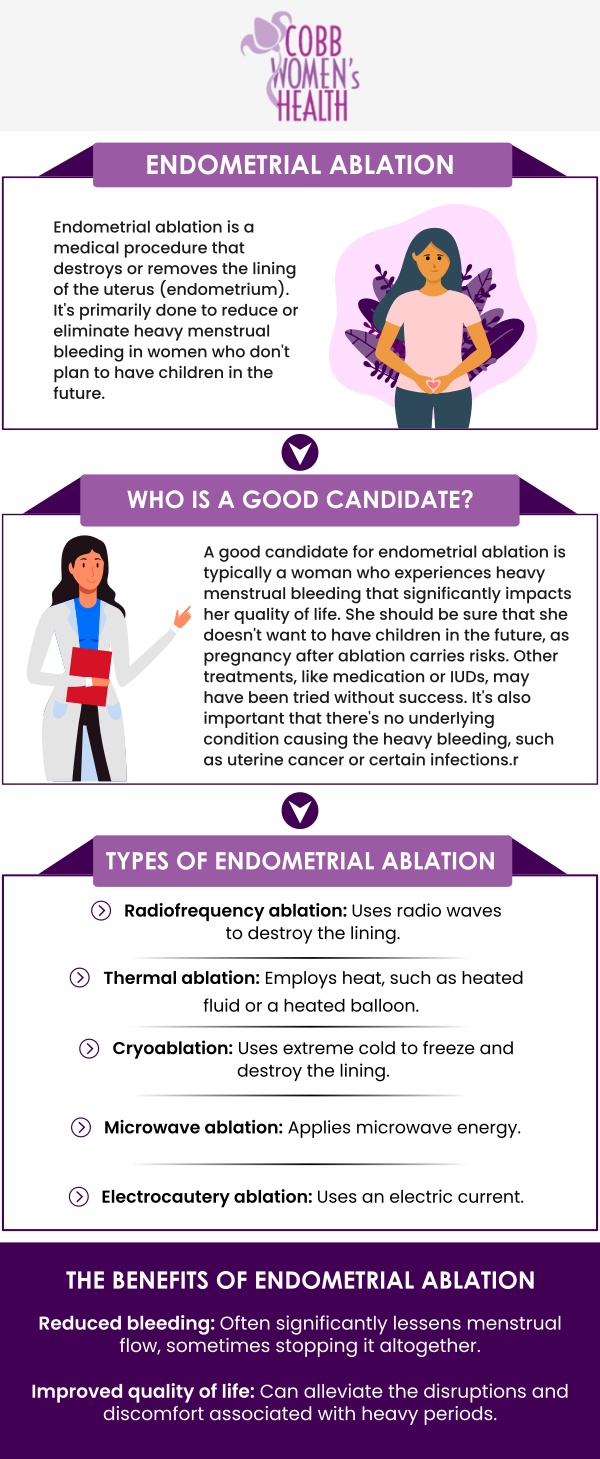
Table of Contents:
What is endometrial ablation?
Why is endometrial ablation done?
What are the types of endometrial ablation?
Who can have endometrial ablation?
Some women experience abnormal bleeding during menstruation, which may include heavy spotting throughout the month or irregular intervals between periods. If medications have not provided relief, endometrial ablation may be an effective, minimally invasive treatment option. This procedure can significantly reduce excessive bleeding or, in some cases, stop it altogether. There are several types of endometrial ablation techniques available, many of which can be performed conveniently in a gynecological clinic. At Cobb Women’s Health, our board-certified gynecologists, Dr. Nandita Mainthia, M.D., F.A.C.O.G., and Dr. Hitendra Hansalia, M.D., F.A.C.O.G., specialize in offering personalized treatment plans to help manage abnormal bleeding and improve your overall well-being.
Endometrial ablation is a medical procedure designed to treat abnormal uterine bleeding by removing or destroying the lining of the uterus (the endometrium). This procedure is primarily used for women who experience heavy or irregular menstrual periods that have not been successfully managed with medications or other treatments. By removing or damaging the uterine lining, endometrial ablation aims to reduce menstrual flow, and in some cases, it may stop the bleeding altogether.
The procedure is typically performed by a gynecologist using specialized tools inserted through the cervix, which is the passage between the vagina and the uterus.
Some types of endometrial ablation can be done in a doctor’s office using local anesthesia, while other, more complex methods may require the procedure to be performed in an operating room under general anesthesia. The choice of technique and the setting will depend on the patient’s specific condition, the severity of symptoms, and the doctor’s recommendation.
Endometrial ablation offers a minimally invasive option for women seeking relief from abnormal uterine bleeding. It is a highly effective treatment for many, helping reduce menstrual flow and improve overall quality of life. However, it is important to note that this procedure is not recommended for women who wish to become pregnant in the future, as it can affect fertility. If you’re considering this treatment, it’s best to consult with a board-certified gynecologist to determine if it’s the right option for you.
Endometrial ablation is a procedure performed to reduce or stop excessive menstrual bleeding. It is typically recommended for women who experience abnormally heavy periods, prolonged bleeding lasting more than eight days, or anemia caused by blood loss due to menstrual bleeding. The goal of this procedure is to alleviate the discomfort and health risks associated with heavy periods, improving the patient’s quality of life.
Before recommending endometrial ablation, doctors typically start by trying other treatments, such as medications or an intrauterine device (IUD), to control the bleeding. These methods may work for some women, but if they are unsuccessful in managing the bleeding, endometrial ablation becomes a viable next step. The procedure is highly effective in reducing menstrual flow and, in some cases, may stop the bleeding altogether.
Endometrial ablation is not recommended for women who are postmenopausal or those who have certain uterine abnormalities, uterine cancer, or an increased risk of uterine cancer. It is also not suitable for women with active pelvic infections. Additionally, this procedure is not recommended for women who wish to become pregnant in the future, as it can affect fertility.
If you’re struggling with heavy or prolonged periods and have not found relief from other treatments, endometrial ablation may be a safe and effective option. Consult with a board-certified gynecologist, such as Dr. Nandita Mainthia, M.D., F.A.C.O.G., and Dr. Hitendra Hansalia, M.D., F.A.C.O.G., at Cobb Women’s Health to discuss whether this procedure is right for you.
Endometrial ablation may be performed at your doctor’s office. Some types of endometrial ablation will need to be performed at a hospital, especially if anesthesia is needed. Endometrial ablation procedures will vary depending on the method used to destroy or remove the endometrium. These methods include:
Electrosurgery is a way of carving furrows into the endometrium. An instrument, such as a heated wire hoop, is used to make these incisions and requires anesthesia.
Cryoablation is the use of extreme cold to create ice balls that freeze the endometrium to destroy it. This is done in cycles, which can take up to six minutes to complete. The number of cycles required will depend on the shape and size of your uterus.
Free-flowing hot fluid is a heated saline solution that is circulated in the uterus for about 10 minutes. The advantage of this procedure is that it can be done in women who have abnormal tissue growth or an irregular-shaped uterus.
Heated balloon procedure is a balloon-type device that is inserted through the cervix and then filled with heated fluid. This procedure can take from two to ten minutes to perform.
Microwave procedure is done with a slender wand that gets inserted through the cervix. The wand sends microwaves that heat the endometrial tissue. This procedure can last from three to five minutes.
Radiofrequency is a special instrument that unfurls an ablation device inside the uterus. This tool transmits a radiofrequency that vaporizes the endometrial tissue. This procedure lasts about two minutes.
Endometrial ablation is a suitable option for women dealing with heavy, abnormal menstrual bleeding that has not been successfully managed with other treatments. However, not everyone is a candidate for the procedure. The first step in determining eligibility is understanding the underlying cause of the irregular bleeding. This procedure is typically recommended for women who are premenopausal or peri-menopausal and have not responded to other treatments such as medications or intrauterine devices (IUDs).
The ideal candidate for endometrial ablation is a woman who experiences bothersome, heavy menstrual periods and no longer wishes to have children. This is because the procedure can affect fertility, and it is not recommended for women who are planning to become pregnant in the future. Additionally, endometrial ablation is not appropriate for women with congenital uterine anomalies or those who have an increased risk of endometrial cancer. Women with certain uterine abnormalities or active pelvic infections may also be excluded from the procedure.
For many women, dealing with abnormal menstruation has been a lifelong struggle, and they may have tried non-surgical treatments without success. These women often seek a solution that can help them regain control over their lives and eliminate the disruptive impact of heavy periods. Endometrial ablation offers a minimally invasive solution for those who no longer want to have children and are ready to find relief from the emotional and physical burden of excessive bleeding.
If you’re struggling with heavy, painful periods and are considering endometrial ablation, it’s important to consult with a board-certified gynecologist, such as Dr. Nandita Mainthia, M.D., F.A.C.O.G., or Dr. Hitendra Hansalia, M.D., F.A.C.O.G., at Cobb Women’s Health. They can help determine if you’re a good candidate for the procedure and guide you toward the right treatment for your specific needs.
If you’re struggling with heavy or abnormal menstrual bleeding and have not found relief through medications or other treatments, endometrial ablation may be the solution you’ve been searching for. At Cobb Women’s Health in Austell, GA, board-certified gynecologists Dr. Nandita Mainthia, M.D., F.A.C.O.G, and Dr. Hitendra Hansalia, M.D., offer effective, minimally invasive endometrial ablation procedures. This treatment targets the uterine lining to reduce or stop heavy menstrual bleeding, improving your quality of life and alleviating the disruption caused by excessive periods.
Dr. Mainthia and Dr. Hansalia specialize in providing personalized care to each patient, ensuring the procedure is tailored to meet your individual needs. With years of experience and a compassionate approach, they use the latest techniques to provide optimal results with minimal recovery time. If you’re ready to take control of your menstrual health, contact Cobb Women’s Health today to schedule a consultation with our board-certified specialists. Let our team help you find relief and restore your well-being. Contact us for more information or schedule an appointment online. We are conveniently located at 1810 Mulkey Rd SW Suite 102, Austell, GA 30106! We serve patients from Austell GA, Lithia Springs GA, Mableton GA, Powder Springs GA, Fair Oaks GA, Hiram GA, Clarkdale GA, Smyrna GA, Marietta GA and surrounding areas.

Check Out Our 5 Star Reviews


Additional Services You May Need


 Send Text
 How May I Help You?
